
Azithromycin: Molecular and Clinical Insights into its Antiviral and Immunomodulatory Actions Against Global Health Threats
Nagendra Kumar1  , Anas D. Fazal2 , Sumit Kumar Panja2* and Sumit Kumar1
1Department of Chemistry, Magadh University, Bodh Gaya , Bihar India .
2Tarsadia Institute of Chemical Science, Uka Tarsadia University, Maliba Campus, Gopal Vidyanagar, Bardoli, Mahuva Road, Surat, Gujarat India .
http://dx.doi.org/10.13005/OJPS10.01.04
The significant impact of viral infections on public health has underscored the urgent need for effective antiviral treatments. Among macrolides, azithromycin has gained attention for its broad-spectrum antiviral activity against several well-known viruses, including SARS-CoV, Zika virus, Ebola virus, Enteroviruses (EVs), Rhinoviruses (RVs), and Influenza A virus. These viruses pose serious global health threats, necessitating the exploration of new therapeutic strategies. Notably, during the COVID-19 pandemic caused by SARS-CoV-2, azithromycin was extensively investigated due to its potential antiviral and immune-modulating effects. This review aims to provide a comprehensive analysis of the molecular mechanisms underlying azithromycin’s antiviral action, emphasizing its interference with viral replication, modulation of the host immune response, and effects on cellular pathways crucial for viral infections. Additionally, the review will examine the clinical applications of azithromycin in the treatment of viral infections, with a particular focus on COVID-19. Furthermore, we will discuss the structure-activity relationship of azithromycin, highlighting how its molecular framework contributes to its antiviral efficacy. By integrating mechanistic insights with clinical evidence, this review seeks to offer a well-rounded perspective on azithromycin as a potential antiviral agent.
Copy the following to cite this article:
Kumar R, Fazal A. D, Panja S. K, Kumar K. Azithromycin: Molecular and Clinical Insights into its Antiviral and Immunomodulatory Actions Against Global Health Threats. Oriental Jornal of Physical Sciences 2025; 10(1).
DOI:http://dx.doi.org/10.13005/OJPS10.01.04Copy the following to cite this URL:
Kumar R, Fazal A. D, Panja S. K, Kumar K. Azithromycin: Molecular and Clinical Insights into its Antiviral and Immunomodulatory Actions Against Global Health Threats. Oriental Jornal of Physical Sciences 2025; 10(1). Available here: https://bit.ly/3FFb9UF
Download article (pdf) Citation Manager Publish History



Introduction
Viruses are microscopic infectious agents primarily composed of nucleic acids, which can be either DNA or RNA, encapsulated within a protective protein coat known as a capsid.1-3 This genetic material serves as the blueprint for viral replication and propagation. Some viruses also possess an additional lipid envelope derived from the host cell membrane, which aids in their ability to infect new cells. Unlike cellular organisms, viruses lack the machinery necessary for independent metabolic activity and replication, relying entirely on host cells to reproduce. Once inside a suitable host, they hijack the cellular mechanisms to synthesize viral components, assemble new virus particles, and spread the infection.
The classification of viruses as living or non-living entities remains a subject of scientific debate. Unlike bacteria and other microorganisms, viruses do not exhibit characteristics commonly associated with life, such as metabolism or the ability to grow independently. They exist in a dormant state outside a host but become active once they infect a cell. This dual nature has led to differing perspectives on whether viruses should be considered living organisms. While some scientists argue that viruses are complex molecular machines rather than living entities, others contend that their ability to evolve and reproduce within a host suggests a form of life, albeit one that is fundamentally different from cellular life forms.
Regardless of how they are classified, the impact of viruses on human health has been profound and undeniable. Throughout history, viral infections have caused widespread disease outbreaks, significantly affecting global populations. The COVID-19 pandemic, which emerged in late 2019, is a stark reminder of how rapidly viral infections can spread, overwhelming healthcare systems and disrupting economies worldwide. Similarly, past outbreaks of highly lethal viruses, such as Ebola and Severe Acute Respiratory Syndrome (SARS), have demonstrated the devastating consequences of emerging infectious diseases. Other viral illnesses, including seasonal influenza and Zika fever, continue to pose persistent health threats, highlighting the ongoing challenge of controlling and preventing viral infections.
Given the substantial impact of viruses on human health, scientific research remains focused on understanding their mechanisms of infection, developing effective treatments, and advancing vaccine technology. The study of viral evolution and host interactions is crucial for anticipating and mitigating future outbreaks. While modern medicine has made significant strides in combating viral diseases through antiviral drugs and vaccines, the unpredictable nature of viral mutations necessitates continuous vigilance and innovation in the field of virology.4-7
 | Figure 1: The molecular framework of the parent macrolide erythromycin, along with its semisynthetic derivatives, azithromycin (15-membered) and clarithromycin (14-membered), is depicted. Structural modifications from the original molecule (black) are highlighted in blue and red.8 |
The COVID-19 pandemic, driven by the novel severe acute respiratory syndrome coronavirus 2 (SARS-CoV-2), has claimed an estimated seven million lives globally to date.9 Furthermore, the Ebola virus outbreak from 2013 to 2016 was particularly devastating, leading to over 30,000 reported cases and more than 11,000 deaths across ten countries. 10
The rapid spread of SARS-CoV-2, which began in late 2019, has triggered a global health crisis of unprecedented scale, characterized by widespread illness, significant loss of life, and profound disruptions to societies and economies. In the early stages of the COVID-19 pandemic, azithromycin (Figure 1) gained attention as a potential treatment option due to its broad-spectrum antiviral properties.11-12 Previous studies have demonstrated its effectiveness against various RNA viruses, including SARS-CoV, Zika virus, Ebola virus, Enteroviruses (EVs), Rhinoviruses (RVs), and Influenza A virus. These viruses were selected for review based on their global prevalence, severity of outbreaks, and documented relevance to azithromycin research. Each of these viruses has posed significant public health challenges, and investigating the potential therapeutic role of azithromycin against them could contribute to the development of improved antiviral strategies.13
This review targets to critically assess the structural characteristics of various RNA viruses, including SARS-CoV-2, Ebola virus, Zika virus, Enteroviruses, Rhinoviruses, and Influenza A virus.14-16 Furthermore, it will evaluate the effects of Azithromycin against these viral agents, exploring its potential as a viable therapeutic strategy in the fight against viral infections.15, 17-27 Understanding the interactions between Azithromycin and these viruses may provide valuable insights for developing effective treatments and improving patient outcomes in the context of viral diseases.1, 4-6, 10, 28
Antiviral effects against enveloped positive-sense RNA viruses
SARS-CoV-2
Coronaviruses belong to the Beta-coronavirus genus within the Coronavirinae subfamily of the Coronaviridae family. This group includes three prominent species: Severe Acute Respiratory Syndrome Coronavirus (SARS-CoV), Middle East Respiratory Syndrome Coronavirus (MERS-CoV), and the novel Severe Acute Respiratory Syndrome Coronavirus 2 (SARS-CoV-2).29-31 These viruses are characterized by a large, positive-sense RNA genome ranging from 25 to 32 kb in length, containing at least six small open reading frames with alternative frame utilization.
Comparative genomic studies reveal that coronaviruses encode four essential structural proteins: spike glycoprotein (S), nucleocapsid (N), envelope (E), and polyprotein (P). Among these, the interaction of the SARS-CoV-2 spike glycoprotein with the host cell membrane is crucial for viral infectivity and pathogenesis. Structurally, the spike protein is a trimeric assembly comprising two primary subunits. The S2 subunits form the central helical stalk, while the S1 subunit envelops the S2 structure. The S1 subunit is further divided into two domains: the N-terminal domain (NTD) and the receptor-binding domain (RBD), both of which play key roles in mediating host cell entry and facilitating infection.29
Effect of Azithromycin on SARS-CoV-2 Virus
Azithromycin has garnered considerable attention for its dual role in combating SARS-CoV-2 infection through antiviral and immunomodulatory mechanisms.10, 32-34 One of the key factors contributing to the infectivity of SARS-CoV-2 is the binding of its spike protein to the angiotensin-converting enzyme 2 (ACE2) receptor on host cells. This interaction facilitates viral entry into the host cell, initiating the infection process. Computational modeling studies suggest that Azithromycin may interfere with this process by binding to the interface between the spike protein and ACE2. By obstructing this crucial interaction, Azithromycin could potentially reduce viral attachment and entry, thereby limiting the spread of the virus within the host system.
Another proposed mechanism by which Azithromycin exerts its antiviral effects is through its interaction with a viral cofactor that plays a critical role in SARS-CoV-2 infectivity. The virus has been shown to utilize host-cell gangliosides, such as GM1, to enhance its attachment and fusion with the host cell membrane. Azithromycin, due to its structural similarity to ganglioside GM1, may act as a competitive inhibitor by mimicking the host-cell ganglioside. This mimicry allows Azithromycin to bind to the ganglioside-binding domain of the spike protein, effectively preventing the virus from interacting with GM1. This disruption in viral-host interaction could significantly impair the virus’s ability to establish infection and propagate within the host.
Non-covalent interactions play a crucial role in stabilizing drug-receptor binding, and they may contribute significantly to Azithromycin’s inhibitory potential against SARS-CoV-2. Intermolecular forces such as hydrogen bonding, van der Waals interactions, and electrostatic interactions influence the strength and specificity of drug binding to viral targets. These forces help in maintaining the stability of the drug-spike protein complex, thereby enhancing Azithromycin’s ability to interfere with viral attachment and entry. The precise nature of these interactions can be further explored through molecular docking and molecular dynamics simulations, providing insights into the structural and energetic aspects of Azithromycin’s binding affinity toward viral components.
Beyond its direct antiviral activity, Azithromycin also exhibits immunomodulatory properties that may contribute to its therapeutic potential against COVID-19. It has been observed to reduce excessive inflammatory responses by modulating cytokine production, which is particularly important in severe cases of COVID-19 where an overactive immune response, known as a cytokine storm, can lead to complications such as acute respiratory distress syndrome (ARDS). By dampening inflammation and supporting immune homeostasis, Azithromycin may offer additional benefits beyond viral inhibition.
Overall, Azithromycin’s multifaceted mechanisms, including its potential to disrupt viral entry, interfere with host-cell interactions, and stabilize inhibitory drug-receptor complexes through non-covalent interactions, highlight its significance as a potential therapeutic agent against SARS-CoV-2. However, further clinical investigations and in-depth mechanistic studies are required to validate these computational predictions and establish the efficacy of Azithromycin in the treatment of COVID-19.29, 35-46
Zika virus
The Zika virus (Figure 2) is a positive-sense, single-stranded RNA virus enveloped within the Flaviviridae family and classified under the Flavivirus genus, which includes 53 recognized species.6, 16 These species are further categorized into three main groups: non-vector, tick-borne, and mosquito-borne viruses. In recent years, members of the Flaviviridae family have been linked to numerous global public health crises, including Japanese encephalitis virus (JEV), Dengue virus (DENV), Yellow fever virus (YFV), West Nile virus (WNV), and Zika virus itself, all of which pose significant challenges to healthcare systems worldwide.
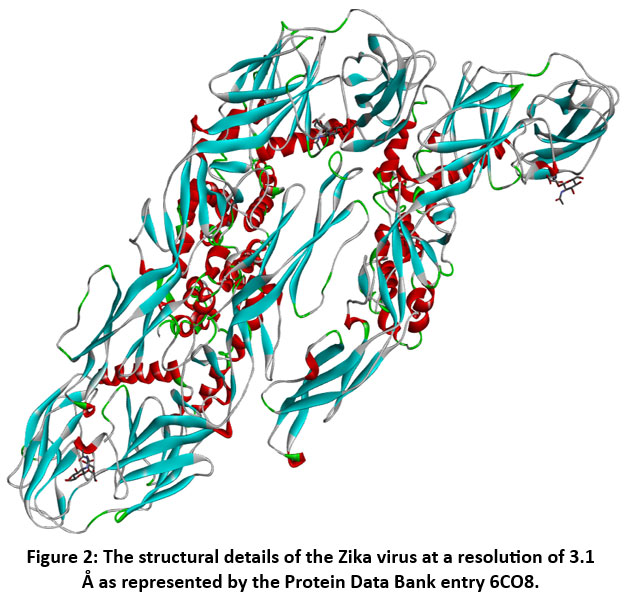 | Figure 2: The structural details of the Zika virus at a resolution of 3.1 Å as represented by the Protein Data Bank entry 6CO8. |
The Zika virus genome comprises a single-stranded RNA approximately 10.8 kilobases in length, classified as positive-sense due to its capability to directly serve as a template for protein synthesis. The viral genome features a continuous open reading frame spanning roughly 10 kilobases, encoding all the necessary proteins for its replication and pathogenicity.
Effect of Azithromycin on Zika Virus
In recent years, the Zika virus has drawn heightened attention, yet despite its significant impact, no effective vaccines or therapeutic options have been developed to date. However, Azithromycin, a widely used antibiotic, has shown promising potential in inhibiting Zika virus infection in vitro.15, 47-49 Azithromycin induces a spectrum of critical immunological responses in host cells. Among these, it significantly upregulates the production of key antiviral proteins, specifically type I and type III interferons (IFNs). Additionally, it activates interferon-stimulated genes (ISGs), which are downstream mediators of the antiviral response regulated by these interferons. During Zika virus infection, host cells initiate the activation of pattern recognition receptors (PRRs), including retinoic acid-inducible gene I (RIG-I) as well as melanoma differentiation-associated gene 5 (MDA5), to detect viral components. Azithromycin enhances the expression of these receptors in response to infection. Furthermore, it modulates the immune response by altering phosphorylation patterns of key signaling proteins. Notably, Azithromycin increases the phosphorylation of interferon regulatory factor 3 (IRF3) as well as TANK-binding kinase 1 (TBK1), with the increases TBK1 phosphorylation occurring independently of IRF3 phosphorylation. This coordinated sequence of immunomodulatory actions highlights Azithromycin's ability to effectively regulate the host immune response, thereby limiting Zika virus replication and infection. These findings underscore its potential as a valuable therapeutic candidate against Zika virus.
Antiviral effects against enveloped negative-sense RNA viruses
Ebola virus
Ebola virus, one of the deadliest pathogens known to humanity, has been at the forefront of global health crises due to its high mortality rates and devastating outbreaks.50-53 Emerging primarily in sub-Saharan Africa, this virus poses a significant challenge to healthcare systems, with its rapid transmission and severe clinical manifestations.54 Ebola virus belongs to the Filoviridae family and the Mononegavirales order, classifying it as an enveloped, negative-sense RNA virus. It is morphologically distinct, characterized by its elongated, filamentous structure. The Ebolavirus genus includes five recognized species: Sudan ebolavirus (SUDV), Bundibugyo ebolavirus (BDBV), Reston virus (RESTV) including Ebola virus (EBOV, previously Zaire ebolavirus), and Taï Forest ebolavirus (TAFV, formerly Côte d'Ivoire ebolavirus). Closely related to the Marburg virus, the Ebola virus is distinguished by its slender filamentous form, measuring approximately 80 nm in diameter and extending up to 14 µm in length. This unique morphology, combined with its genomic structure, underpins its virulence and ability to evade immune responses, making it a focus of intensive research for vaccine and therapeutic development.
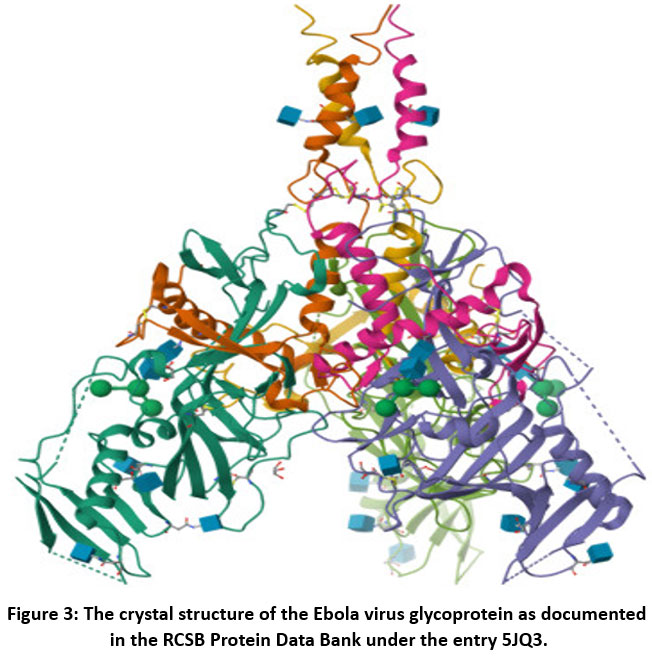 | Figure 3: The crystal structure of the Ebola virus glycoprotein as documented in the RCSB Protein Data Bank under the entry 5JQ3. |
Effect of Azithromycin on Ebola virus
Ebola virus remains a formidable challenge in global public health, with limited therapeutic options available to counter its high mortality and severe pathogenesis.55-78 The quest for effective antiviral agents has led to the investigation of repurposed drugs, including Azithromycin, which is widely used as an antibiotic.79 Despite its established role in treating bacterial infections, Azithromycin has shown potential antiviral activity, including against the Ebola virus, although its efficacy in vivo has produced inconsistent outcomes. In vitro studies have demonstrated Azithromycin’s ability to inhibit Ebola virus replication is primarily attributed to its modulation of the systemic antiviral response through the interferon (IFN) signaling pathway.12, 79 For example, promising results in cell culture models indicate its preventive effects against Ebola virus. In small animal studies, Azithromycin dosed at 100 mg/kg twice daily improved survival rates in mice to 60%, compared to 20% in control groups (P = 0.02). However, subsequent repetitions of the same experimental conditions failed to replicate statistically significant outcomes. Similarly, a regimen of 210 mg/kg oral Azithromycin administered once daily showed no survival benefits, and testing various doses in guinea pigs did not yield favorable results.
Interestingly, synergistic drug combinations have demonstrated enhanced efficacy against the Ebola virus. A three-drug combination significantly amplified antiviral activity in vitro and showed clinical relevance. Notably, co-administration of chloroquine and maprotiline increased Azithromycin's antiviral potency against Ebola virus by fivefold. Further combinatorial screening using pseudovirion and mini-genome replicon systems identified Azithromycin among other drugs with some activity against the Ebola virus. Mechanistic studies have linked Azithromycin's inhibitory effects to its cationic amphiphilic structure, which disrupts the homeostasis of late endosomal vesicles, a mechanism comparable to tamoxifen. Additionally, it is believed that Azithromycin interferes with phospholipid metabolism and disrupts late endosome/lysosome (LE/Lys) calcium homeostasis, further impeding Ebola virus infection. While Azithromycin shows promise in preclinical settings, the variability in animal model results and its dependence on combinatorial strategies highlight the need for further investigation to fully understand its antiviral potential and optimize its application against the Ebola virus.
Influenza A virus
Influenza remains a significant global public health issue due to its capacity to cause widespread epidemics and pandemics, particularly during seasonal outbreaks. The disease imposes a considerable burden on healthcare systems, primarily because of its high transmissibility and potential to cause severe respiratory complications. Influenza viruses, part of the Orthomyxoviridae family, are enveloped, negative-sense RNA viruses consisting of eight segmented RNA molecules. Their rapid mutation and ability to develop resistance to conventional treatments highlight the critical need for effective antiviral strategies to mitigate their impact.80-81 Each segment encodes a specific protein, playing a vital role in viral replication, functionality, and assembly. Influenza viruses are categorized into three main types: A, B, and C. Influenza A is the principal driver of pandemics, while types B and C are more commonly associated with localized epidemics.
The use of macrolide antibiotics as therapeutic agents for respiratory viral infections has garnered attention due to their well-established anti-inflammatory and immune-modulatory properties. These drugs offer potential benefits beyond their antimicrobial effects, particularly in addressing the immune dysregulation caused by viral infections. The severity of influenza-related complications is closely tied to an aberrant cytokine response, which contributes to a cascade of severe clinical outcomes, including acute bronchopneumonia, pulmonary edema, alveolar hemorrhage, reactive hemophagocytosis, and acute respiratory distress syndrome (ARDS). In this context, the exploration of macrolides as adjunctive therapies is an intriguing avenue of research. By modulating the host immune response and mitigating excessive inflammation, macrolides may offer a dual-action approach: suppressing bacterial co-infections commonly associated with influenza and alleviating virus-induced immunopathology. Further studies are necessary to validate the efficacy of macrolides in influenza treatment and to elucidate their mechanisms in immune modulation during viral infections.
Effect of Azithromycin on Influenza A virus
Macrolides have emerged as versatile agents with therapeutic potential extending beyond their well-documented antibacterial properties. Their ability to modulate immune responses and directly impact viral replication processes has garnered increasing interest, particularly in the context of influenza and other viral infections. Understanding the multifaceted mechanisms through which macrolides exert their effects could pave the way for innovative therapeutic approaches to combat respiratory viral diseases. Extensive research indicates that macrolides can mitigate virus-induced exacerbations, suppress the progression of inflammatory cascades, and reduce the excessive cytokine release often associated with severe viral infections. This cytokine modulation helps alleviate the hyperinflammatory state, which is a hallmark of severe clinical outcomes like acute respiratory distress syndrome (ARDS). 80, 82
 | Figure 4: Schematic diagram of Immunomodulatory behavior shown by azithromycin.8 |
In addition to their immunomodulatory effects, macrolides influence the functional dynamics of phagocytes, the immune cells pivotal in host defense. A schematic representation of the immunomodulatory effects of azithromycin is presented in Figure 2. They can modulate phagocytic activity, oxidative burst, cytokine secretion, bacterial clearance, and chemotaxis. By optimizing these cellular processes, macrolides enhance the host's ability to control infections effectively while minimizing collateral tissue damage caused by excessive inflammation. Notably, macrolides may also interfere with the replication cycle of influenza viruses, thereby reducing viral production within infected cells. This antiviral effect is thought to be mediated by inhibiting the intracellular proteolysis of the hemagglutinin precursor HA0, a critical step in the virus's replication and infectivity. By targeting this essential mechanism, macrolides disrupt the maturation of viral particles, potentially limiting the spread of infection.
The dual role of macrolides in modulating the immune response and directly impacting viral replication underscores their potential as valuable therapeutic agents. Further investigations are warranted to explore their efficacy in clinical settings, optimize dosing strategies, and fully elucidate their antiviral mechanisms. Such efforts could significantly enhance the treatment landscape for influenza and other respiratory viral infections.
Antiviral effects against non-enveloped positive-sense RNA viruses
Enterovirus and Rhinoviruses
Enteroviruses (EVs) and Rhinoviruses (RVs) are among the most clinically significant members of the Picornaviridae family, causing widespread and diverse health challenges across all age groups.83-86 These viruses are associated with a broad spectrum of diseases, ranging from mild respiratory infections to life-threatening conditions, underscoring their public health relevance. Their ability to cause both acute and chronic illnesses highlights the necessity for continued research into their virology, pathogenesis, and potential therapeutic strategies. EVs and RVs are small, non-enveloped, positive-sense RNA viruses with a genome size of approximately 7.2–7.5 kb.87 Despite their relatively simple structure, they are responsible for a range of illnesses, including poliomyelitis, hand-foot-mouth disease, severe bronchiolitis, encephalitis, meningitis, pneumonia, and even cardiac conditions such as myocarditis. The genetic material of these viruses is encapsulated within an icosahedral capsid with a diameter of about 30 nm, providing protection and facilitating host cell invasion. The viral genome is composed of a single, continuous RNA strand that encodes a polyprotein. This polyprotein is subsequently cleaved into 11 functional proteins by virus-specific proteases, which are critical for the viral replication cycle and assembly. These proteins include structural components that form the capsid and non-structural proteins essential for RNA replication and host cell manipulation.
Notably, the simple yet efficient genetic organization of EVs and RVs allows for rapid replication and adaptability, contributing to their ability to cause outbreaks and persistent infections. Advances in molecular biology have shed light on their replication mechanisms, which rely heavily on the host cell's machinery. This dependency offers potential targets for antiviral intervention, such as inhibitors of viral proteases or capsid-binding molecules that disrupt the attachment and entry processes. Understanding the virology and pathogenic mechanisms of EVs and RVs is crucial for developing effective prevention and treatment strategies. Research focusing on their molecular biology, immune evasion tactics, and host-virus interactions will be pivotal in combating the diseases caused by these viruses.
Effects of Azithromycin against Enterovirus and Rhinoviruses
Azithromycin, a widely used macrolide antibiotic, has emerged as a promising antiviral agent against Enteroviruses, including Enterovirus A71 (EV-A71) and Rhinoviruses.12, 48, 88-90 Research indicates that macrolides possess immunomodulatory properties, which may enhance host defenses against viral infections while simultaneously exerting direct antiviral effects. As a result, there is increasing interest in exploring the therapeutic potential of Azithromycin in treating viral infections, particularly those caused by Enteroviruses and Rhinoviruses.
Studies involving animal models have demonstrated that Azithromycin has a more potent antiviral effect than spiramycin (SPM) when addressing infections caused by EV-A71. 47 Notably, in a murine model of severe EV-A71 infection, treatment with Azithromycin resulted in a significant reduction in disease severity and markedly improved survival rates. These findings highlight Azithromycin's potential as a viable therapeutic option for conditions associated with EV-A71, such as hand-foot-mouth disease. The ability of Azithromycin to alleviate symptoms and enhance survival in severe viral infections underscores its importance in the ongoing search for effective antiviral therapies. Further research is essential to fully elucidate the mechanisms underlying Azithromycin's antiviral effects and to assess its efficacy in clinical settings for patients suffering from enteroviral infections. By expanding our understanding of its therapeutic potential, Azithromycin may contribute to more effective management strategies for viral diseases, improving outcomes for affected individuals.
Conclusion
The frequency and severity of global viral outbreaks are escalating, presenting significant public health and economic challenges. The COVID-19 pandemic exemplifies how rapidly a virus can evolve into a global crisis, spurring an urgent need for effective antiviral therapeutics. A cornerstone of antiviral drug development lies in understanding viral structures and the molecular interactions of drugs with these pathogens.
This review explores the structural characteristics of various RNA viruses and evaluates the antiviral effects of azithromycin. Although azithromycin gained substantial attention as a potential treatment for COVID-19, the World Health Organization’s recent recommendation against its use for SARS-CoV-2 underscores the dynamic nature of its clinical relevance. Beyond COVID-19, in vitro studies have demonstrated azithromycin's efficacy in inhibiting Zika virus infection and Ebola virus activity, highlighting its broad-spectrum antiviral potential.
Intriguingly, emerging research suggests azithromycin may possess anti-cancer properties, opening new avenues for exploration in the scientific community. However, its antiviral effects against DNA viruses remain underexplored, suggesting a promising direction for future investigations. Moreover, the potential interactions—whether synergistic or antagonistic—of azithromycin with other antiviral agents warrant deeper examination.
Azithromycin's diverse biological activities present a fertile ground for research, encompassing not only antiviral strategies but also broader biomedical applications. As the threat of viral epidemics persists, continued exploration of this macrolide's mechanisms and applications is essential for advancing therapeutic innovation.
Acknowledgment
PG Department of Chemistry thanks Magadh University, Bodh Gaya, Bihar, India for providing lab facility and SERB, Department of Science and Technology (DST), India (Grant No. SRG/2019/002284) for financial support. SKP acknowledges Tarsadia Institute of Chemical Science, Uka Tarsadia University, Surat-394350, Gujrat, India for providing the infrastructure and instrument facilities.
Funding Sources
The author(s) received no financial support for the research, authorship, and/or publication of this article
Conflict of Interest
The authors do not have any conflict of interest
Data Availability Statement
This statement does not apply to this article
Ethics Statement
This research did not involve human participants, animal subjects, or any material that requires ethical approval
Informed Consent Statement
This study did not involve human participants, and therefore, informed consent was not required.
Permission to reproduce material from other sources
Not Applicable
Author Contributions
Ravindra Kumar: Writing – Original Draft.
Anas D. Fazal: Writing – Original Draft.
Sumit Kumar Panja: Writing – Original Draft, Funding Acquisition, Resources, Supervision.
Sumit Kumar: Writing – Original Draft, Funding Acquisition, Resources, Supervision
References
- Van Etten J. L., Lane L. C., Meints R. H. Viruses and viruslike particles of eukaryotic algae. Microbiological Reviews. 1991; 55 (4): 586-620
CrossRef - Niemeyer C. M. Nanoparticles, proteins, and nucleic acids: biotechnology meets materials science. Angew. Chem., Int. Ed. 2001; 40 (22): 4128-4158
CrossRef - Robinson H. L., Pertmer T. M. DNA vaccines for viral infections: basic studies and applications. 2000:
CrossRef - Ciotti M., Ciccozzi M., Terrinoni A., Jiang W.-C., Wang C.-B., Bernardini S. The COVID-19 pandemic. Critical reviews in clinical laboratory sciences. 2020; 57 (6): 365-388
CrossRef - Hsieh Y.-C., Wu T.-Z., Liu D.-P., Shao P.-L., Chang L.-Y., Lu C.-Y., Lee C.-Y., Huang F.-Y., Huang L.-M. Influenza pandemics: past, present and future. Journal of the Formosan Medical Association. 2006; 105 (1): 1-6
CrossRef - Lucey D. R., Gostin L. O. The emerging Zika pandemic: enhancing preparedness. Jama. 2016; 315 (9): 865-866
CrossRef - Baloch S., Baloch M. A., Zheng T., Pei X. The coronavirus disease 2019 (COVID-19) pandemic. The Tohoku journal of experimental medicine. 2020; 250 (4): 271-278
CrossRef - Kournoutou G. G., Dinos G. Azithromycin through the Lens of the COVID-19 Treatment Antibiotics [Online], 2022.
CrossRef - Dashraath P., Wong J. L. J., Lim M. X. K., Lim L. M., Li S., Biswas A., Choolani M., Mattar C., Su L. L. Coronavirus disease 2019 (COVID-19) pandemic and pregnancy. Am. J. Obstet. Gynecol. 2020; 222 (6): 521-531
CrossRef - Pokhrel S., Chhetri R. A literature review on impact of COVID-19 pandemic on teaching and learning. Higher education for the future. 2021; 8 (1): 133-141
CrossRef - Sultana J., Cutroneo P. M., Crisafulli S., Puglisi G., Caramori G., Trifirò G. Azithromycin in COVID-19 patients: pharmacological mechanism, clinical evidence and prescribing guidelines. Drug safety. 2020; 43: 691-698
CrossRef - Bleyzac N., Goutelle S., Bourguignon L., Tod M., Azithromycin for COVID-19: more than just an antimicrobial? Springer: 2020; Vol. 40, pp 683-686.
CrossRef - Kumar S. Curcumin as a potential multiple-target inhibitor against SARS-CoV-2 Infection: A detailed interaction study using quantum chemical calculations: Scientific paper. J. Serb. Chem. Soc. 2022; 88 (4): 381-394
CrossRef - Bosseboeuf E., Aubry M., Nhan T., de Pina J. J., Rolain J. M., Raoult D., Musso D. Azithromycin inhibits the replication of Zika virus. J Antivir Antiretrovir. 2018; 10 (1): 6-11
CrossRef - Oliver M. E., Hinks T. S. Azithromycin in viral infections. Reviews in medical virology. 2021; 31 (2): e2163
CrossRef - Li C., Zu S., Deng Y.-Q., Li D., Parvatiyar K., Quanquin N., Shang J., Sun N., Su J., Liu Z. Azithromycin protects against Zika virus infection by upregulating virus-induced type I and III interferon responses. Antimicrob. Agents Chemother. 2019; 63 (12): 10.1128/aac. 00394-19
CrossRef - Sayadi M. H., Sobhani S., Shekari H. Photocatalytic Degradation of Azithromycin Using GO@Fe3O4/ ZnO/ SnO2 Nanocomposites. J. Cleaner Prod. 2019; 232: 127
CrossRef - Mehrdoost A., Jalilzadeh Yengejeh R., Mohammadi M. K., Babaei A. A., Haghighatzadeh A. Comparative Analysis of UV-Assisted Removal of Azithromycin and Cefixime from Aqueous Solution Using PAC/Fe/Si/Zn Nanocomposite. J. Health Sci. Surveill. Syst. 2021; 9: 39
- Saadi Z., Fazaeli R., Vafajoo L., Naser I., Mohammadi G. Promotion of Clinoptilolite Adsorption for Azithromycin Antibiotic by Tween 80 and Triton X-100 Surface Modifiers under Batch and Fixed-Bed Processes. Chem. Eng. Commun. 2020; 208: 328
CrossRef - Wahab M., Zahoor M., Muhammad Salman S., Kamran A. W., Naz S., Burlakovs J., Kallistova A., Pimenov N., Zekker I. Adsorption-Membrane Hybrid Approach for the Removal of Azithromycin from Water: An Attempt to Minimize Drug Resistance Problem. Water. 2021; 13: 1969
CrossRef - Lalak N. J., Morris D. L. Azithromycin Clinical Pharmacokinetics. Clin. Pharmacokinet. 1993; 25: 370
CrossRef - Yang Z. Y., Wang L., Tang X. Determination of Azithromycin by Ion-Pair HPLC with UV Detection. J. Pharm. Biomed. Anal. 2009; 49: 811
CrossRef - Drew R. H., Gallis H. A. Azithromycin?Spectrum of Activity, Pharmacokinetics, and Clinical Applications. Pharmacotherapy. 1992; 12: 161
CrossRef - Chen B. M., Liang Y. Z., Chen X., Liu S. G., Deng F. L., Zhou P. Quantitative Determination of Azithromycin in Human Plasma by Liquid Chromatography–Mass Spectrometry and Its Application in a Bioequivalence Study. J. Pharmaceut. Biomed. Anal. 2006; 42: 480
CrossRef - Davoodi S., Dahrazma B., Goudarzi N., Gorji H. G. Adsorptive Removal of Azithromycin from Aqueous Solutions Using Raw and Saponin-Modified Nano Diatomite. Water Sci. Technol. 2019; 80: 939
CrossRef - Talaiekhozani A., Joudaki S., Banisharif F., Eskandari Z., Cho J., Moghadam G., Rezania S. Comparison of Azithromycin Removal from Water Using UV Radiation, Fe (VI) Oxidation Process and ZnO Nanoparticles. Int. J. Environ. Res. Publ. Health. 2020; 17: 1758
CrossRef - Upoma B. P., Yasmin S., Ali Shaikh M. A., Jahan T., Haque M. A., Moniruzzaman M., Kabir M. H. A Fast Adsorption of Azithromycin on Waste-Product-Derived Graphene Oxide Induced by H-Bonding and Electrostatic Interactions. ACS Omega. 2022; 7 (34): 29655-29665
CrossRef - Fowler III A. A., Kim C., Lepler L., Malhotra R., Debesa O., Natarajan R., Fisher B. J., Syed A., DeWilde C., Priday A. Intravenous vitamin C as adjunctive therapy for enterovirus/rhinovirus induced acute respiratory distress syndrome. World journal of critical care medicine. 2017; 6 (1): 85
CrossRef - Kumar S. Curcumin as a potential multiple-target inhibitor against SARS-CoV-2 Infection: A detailed interaction study using quantum chemical calculations: Scientific paper. J. Serb. Chem. Soc. 2023; 88 (4): 381-394
CrossRef - Rabaan A. A., Al-Ahmed S. H., Haque S., Sah R., Tiwari R., Malik Y. S., Dhama K., Yatoo M. I., Bonilla-Aldana D. K., Rodriguez-Morales A. J. SARS-CoV-2, SARS-CoV, and MERS-COV: a comparative overview. Infez Med. 2020; 28 (2): 174-184
- Yan Y., Chang L., Wang L. Laboratory testing of SARS?CoV, MERS?CoV, and SARS?CoV?2 (2019?nCoV): Current status, challenges, and countermeasures. Reviews in medical virology. 2020; 30 (3): e2106
CrossRef - Echeverría-Esnal D., Martin-Ontiyuelo C., Navarrete-Rouco M. E., De-Antonio Cuscó M., Ferrández O., Horcajada J. P., Grau S. Azithromycin in the treatment of COVID-19: a review. Expert review of anti-infective therapy. 2021; 19 (2): 147-163
CrossRef - Safaeeardebili E. Analysis of CD147 inhibitors such as ivermectin, azithromycin with respect to their potential therapeutic use against the emerging COVID mutations. Politecnico di Torino, 2022.
- Pourmadadi M., Tokasi S., Fathi-karkan S., Homayoonfal M., Rahdar A., Behzadmehr R., Aboudzadeh M. A. Azithromycin delivery via polymeric and non-polymeric nanoparticle systems: Expanding frontiers in cancer therapy. Eur. Polym. J. 2024: 113267
CrossRef - Kumar Panja S., Kumar S., Fazal A. D., Bera S. Molecular aggregation kinetics of Heteropolyene: An Experimental, topological and solvation dynamics studies. Journal of Photochemistry and Photobiology A: Chemistry. 2023; 445: 115084
CrossRef - Kumar Panja S., Kumar S. Weak intra and intermolecular interactions via aliphatic hydrogen bonding in piperidinium based ionic Liquids: Experimental, topological and molecular dynamics studies. J. Mol. Liq. 2023; 375: 121354
CrossRef - Kumar V., Kumar R., Kumar N., Kumar S. Solvation Dynamics of Oxadiazoles as Potential Candidate for Drug Preparation. Asian J. Chem. 2023; 35 (4):
CrossRef - Kumar S., Singh S. K., Vaishnav J. K., Hill J. G., Das A. Interplay among Electrostatic, Dispersion, and Steric Interactions: Spectroscopy and Quantum Chemical Calculations of ?-Hydrogen Bonded Complexes. ChemPhysChem. 2017; 18 (7): 828-838
CrossRef - Kumar S., Mukherjee A., Das A. Structure of Indole···Imidazole Heterodimer in a Supersonic Jet: A Gas Phase Study on the Interaction between the Aromatic Side Chains of Tryptophan and Histidine Residues in Proteins. J. Phys. Chem. A. 2012; 116 (47): 11573-11580
CrossRef - Kumar S., Das A. Observation of exclusively ?-stacked heterodimer of indole and hexafluorobenzene in the gas phase. J. Chem. Phys. 2013; 139 (10): 104311
CrossRef - Kumar S., Singh S. K., Calabrese C., Maris A., Melandri S., Das A. Structure of saligenin: microwave, UV and IR spectroscopy studies in a supersonic jet combined with quantum chemistry calculations. Phys. Chem. Chem. Phys. 2014; 16 (32): 17163
CrossRef - Kumar S., Pande V., Das A. ?-Hydrogen Bonding Wins over Conventional Hydrogen Bonding Interaction: A Jet-Cooled Study of Indole···Furan Heterodimer. J. Phys. Chem. A. 2012; 116 (5): 1368-1374
CrossRef - Kumar S., Biswas P., Kaul I., Das A. Competition between Hydrogen Bonding and Dispersion Interactions in the Indole···Pyridine Dimer and (Indole)2···Pyridine Trimer Studied in a Supersonic Jet. J. Phys. Chem. A. 2011; 115 (26): 7461-7472
CrossRef - Kumar S., Kaul I., Biswas P., Das A. Structure of 7-Azaindole···2-Fluoropyridine Dimer in a Supersonic Jet: Competition between N–H···N and N–H···F Interactions. J. Phys. Chem. A. 2011; 115 (37): 10299-10308
CrossRef - Kumar S., Das A. Mimicking trimeric interactions in the aromatic side chains of the proteins: A gas phase study of indole...(pyrrole)2 heterotrimer. J. Chem. Phys. 2012; 136 (17): 174302
CrossRef - Kumar S., Das A. Effect of acceptor heteroatoms on ?-hydrogen bonding interactions: A study of indole???thiophene heterodimer in a supersonic jet. J. Chem. Phys. 2012; 137 (9): 094309
CrossRef - Khoshnood S., Shirani M., Dalir A., Moradi M., Haddadi M. H., Sadeghifard N., Birjandi F. S., Yashmi I., Heidary M. Antiviral effects of azithromycin: A narrative review. Biomedicine & Pharmacotherapy. 2022; 147: 112682
CrossRef - Firth A., Prathapan P. Azithromycin: the first broad-spectrum therapeutic. Eur. J. Med. Chem. 2020; 207: 112739
CrossRef - Gibson P. G., Yang I. A., Upham J. W., Reynolds P. N., Hodge S., James A. L., Jenkins C., Peters M. J., Marks G. B., Baraket M. Effect of azithromycin on asthma exacerbations and quality of life in adults with persistent uncontrolled asthma (AMAZES): a randomised, double-blind, placebo-controlled trial. The Lancet. 2017; 390 (10095): 659-668
CrossRef - Jacob S. T., Crozier I., Fischer W. A., Hewlett A., Kraft C. S., Vega M.-A. d. L., Soka M. J., Wahl V., Griffiths A., Bollinger L. Ebola virus disease. Nature reviews Disease primers. 2020; 6 (1): 13
CrossRef - Bray M., Davis K., Geisbert T., Schmaljohn C., Huggins J. A mouse model for evaluation of prophylaxis and therapy of Ebola hemorrhagic fever. J. Infect. Dis. 1999; 179 (Suppl. 1): S248
CrossRef - Johansen L. M., Brannan J. M., Delos S. E., Shoemaker C. J., Stossel A., Lear C., Hoffstrom B. G., DeWald L. E., Schornberg K. L., Scully C., Lehár J., Hensley L. E., White J. M., Olinger G. G. FDA-approved selective estrogen receptor modulators inhibit Ebola virus infection. Sci. Transl. Med. 2013; 5: 190ra79
CrossRef - Madrid P. B., Panchal R. G., Warren T. K., Shurtleff A. C., Endsley A. N., Green C. E., Kolokoltsov A., Davey R., Manger I. D., Gilfillan L., Bavari S., Tanga M. J. Evaluation of Ebola Virus Inhibitors for Drug Repurposing. ACS Infectious Diseases. 2015; 1 (7): 317-326
CrossRef - Malvy D., McElroy A. K., de Clerck H., Günther S., van Griensven J. Ebola virus disease. The Lancet. 2019; 393 (10174): 936-948
CrossRef - Sakurai Y., Kolokoltsov A. A., Chen C. C., Tidwell M. W., Bauta W. E., Klugbauer N., Grimm C., Wahl-Schott C., Biel M., Davey R. A. Ebola virus. Two-pore channels control Ebola virus host cell entry and are drug targets for disease treatment. Science. 2015; 347: 995
CrossRef - Shoemaker C. J., Schornberg K. L., Delos S. E., Scully C., Pajouhesh H., Olinger G. G., Johansen L. M., White J. M. Multiple cationic amphiphiles induce a Niemann-Pick C phenotype and inhibit Ebola virus entry and infection. PLoS One. 2013; 8: e56265
CrossRef - Fan H., Du X., Zhang J., Zheng H., Lu X., Wu Q., Li H., Wang H., Shi Y., Gao G., Zhou Z., Tan D. X., Li X. Selective inhibition of Ebola entry with selective estrogen receptor modulators by disrupting the endolysosomal calcium. Sci. Rep. 2017; 7: 41226
CrossRef - Miller M. E., Adhikary S., Kolokoltsov A. A., Davey R. A. Ebolavirus requires acid sphingomyelinase activity and plasma membrane sphingomyelin for infection. J. Virol. 2012; 86: 7473
CrossRef - Lu F., Liang Q., Abi-Mosleh L., Das A., De Brabander J. K., Goldstein J. L., Brown M. S. Identification of NPC1 as the target of U18666A, an inhibitor of lysosomal cholesterol export and Ebola infection. eLife. 2015; 4: 1
CrossRef - Madrid P. B., Panchal R. G., Warren T. K., Shurtleff A. C., Endsley A. N., Green C. E., Kolokoltsov A., Davey R., Manger I. D., Gilfillan L., Bavari S., Tanga M. J. Evaluation of Ebola virus inhibitors for drug repurposing. ACS Infect. Dis. 2015; 1: 317
CrossRef - Cheng H., Lear-Rooney C. M., Johansen L., Varhegyi E., Chen Z. W., Olinger G. G., Rong L. Inhibition of Ebola and Marburg virus entry by G protein-coupled receptor antagonists. J. Virol. 2015; 89: 9932
CrossRef - Anantpadma M., Kouznetsova J., Wang H., Huang R., Kolokoltsov A., Guha R., Lindstrom A. R., Shtanko O., Simeonov A., Maloney D. J., Maury W., LaCount D. J., Jadhav A., Davey R. A. Large-scale screening and identification of novel Ebola virus and Marburg virus entry inhibitors. Antimicrob. Agents Chemother. 2016; 60: 4471
CrossRef - Edwards M. R., Pietzsch C., Vausselin T., Shaw M. L., Bukreyev A., Basler C. F. High-throughput minigenome system for identifying small-molecule inhibitors of Ebola virus replication. ACS Infect. Dis. 2015; 1: 380
CrossRef - Kouznetsova J., Sun W., Martinez-Romero C., Tawa G., Shinn P., Chen C. Z., Schimmer A., Sanderson P., McKew J. C., Zheng W., Garcia-Sastre A. Identification of 53 compounds that block Ebola virus-like particle entry via a repurposing screen of approved drugs. Emerging Microbes Infect. 2014; 3: e84
CrossRef - Johansen L. M., DeWald L. E., Shoemaker C. J., Hoffstrom B. G., Lear-Rooney C. M., Stossel A., Nelson E., Delos S. E., Simmons J. A., Grenier J. M., Pierce L. T., Pajouhesh H., Lehar J., Hensley L. E., Glass P. J., White J. M., Olinger G. G. A screen of approved drugs and molecular probes identifies therapeutics with anti-Ebola virus activity. Sci. Transl. Med. 2015; 7: 290ra89
CrossRef - Johansen L. M., Brannan J. M., Delos S. E., Shoemaker C. J., Stossel A., Lear C., Hoffstrom B. G., Dewald L. E., Schornberg K. L., Scully C., Lehar J., Hensley L. E., White J. M., Olinger G. G. FDA-approved selective estrogen receptor modulators inhibit Ebola virus infection. Sci. Transl. Med. 2013; 5: 190ra79
CrossRef - Zhao Y., Ren J., Harlos K., Jones D. M., Zeltina A., Bowden T. A., Padilla-Parra S., Fry E. E., Stuart D. I. Toremifene interacts with and destabilizes the Ebola virus glycoprotein. Nature. 2016; 535: 169
CrossRef - Weissenhorn W., Carfi A., Lee K. H., Skehel J. J., Wiley D. C. Crystal structure of the Ebola virus membrane fusion subunit, GP2, from the envelope glycoprotein ectodomain. Mol. Cell. 1998; 2: 605
CrossRef - Zhao Y., Ren J., Harlos K., Stuart D. I. Structure of glycosylated NPC1 luminal domain C reveals insights into NPC2 and Ebola virus interactions. FEBS Lett. 2016; 590: 605
CrossRef - Wang H., Shi Y., Song J., Qi J., Lu G., Yan J., Gao G. F. Ebola viral glycoprotein bound to its endosomal receptor Niemann-Pick C1. Cell. 2016; 164: 258
CrossRef - Lee J. E., Fusco M. L., Hessell A. J., Oswald W. B., Burton D. R., Saphire E. O. Structure of the Ebola virus glycoprotein bound to an antibody from a human survivor. Nature. 2008; 454: 177
CrossRef - Takada A., Robison C., Goto H., Sanchez A., Murti K. G., Whitt M. A., Kawaoka Y. A system for functional analysis of Ebola virus glycoprotein. Proc. Natl. Acad. Sci. U. S. A. 1997; 94: 14764
CrossRef - Saeed M. F., Kolokoltsov A. A., Albrecht T., Davey R. A. Cellular entry of ebola virus involves uptake by a macropinocytosis-like mechanism and subsequent trafficking through early and late endosomes. PLoS Pathog. 2010; 6: e1001110
CrossRef - Nanbo A., Imai M., Watanabe S., Noda T., Takahashi K., Neumann G., Halfmann P., Kawaoka Y. Ebolavirus is internalized into host cells via macropinocytosis in a viral glycoprotein-dependent manner. PLoS Pathog. 2010; 6: e1001121
CrossRef - Hacke M., Bjorkholm P., Hellwig A., Himmels P., de Almodovar C. R., Brugger B., Wieland F., Ernst A. M. Inhibition of Ebola virus glycoprotein-mediated cytotoxicity by targeting its transmembrane domain and cholesterol. Nat. Commun. 2015; 6: 7688
CrossRef - Carette J. E., Raaben M., Wong A. C., Herbert A. S., Obernosterer G., Mulherkar N., Kuehne A. I., Kranzusch P. J., Griffin A. M., Ruthel G., Dal Cin P., Dye J. M., Whelan S. P., Chandran K., Brummelkamp T. R. Ebola virus entry requires the cholesterol transporter Niemann-Pick C1. Nature. 2011; 477: 340
CrossRef - Coltart C. E., Lindsey B., Ghinai I., Johnson A. M., Heymann D. L. The Ebola outbreak, 2013–2016: old lessons for new epidemics. Philos. Trans. R. Soc., B. 2017; 372: 1
CrossRef - Ren J., Zhao Y., Fry E. E., Stuart D. I. Target Identification and Mode of Action of Four Chemically Divergent Drugs against Ebolavirus Infection. J. Med. Chem. 2018; 61 (3): 724-733
CrossRef - Madrid P. B., Panchal R. G., Warren T. K., Shurtleff A. C., Endsley A. N., Green C. E., Kolokoltsov A., Davey R., Manger I. D., Gilfillan L. Evaluation of Ebola virus inhibitors for drug repurposing. ACS infectious diseases. 2015; 1 (7): 317-326
CrossRef - Cheung T. K., Poon L. L. Biology of influenza a virus. Ann. N. Y. Acad. Sci. 2007; 1102 (1): 1-25
CrossRef - Eisfeld A. J., Neumann G., Kawaoka Y. At the centre: influenza A virus ribonucleoproteins. Nat. Rev. Microbiol. 2015; 13 (1): 28-41
CrossRef - Du X., Zuo X., Meng F., Han C., Ouyang W., Han Y., Gu Y., Zhao X., Xu F., Qin F. X. Direct inhibitory effect on viral entry of influenza A and SARS?CoV?2 viruses by azithromycin. Cell Proliferation. 2021; 54 (1): e12953
CrossRef - Garcia J., Espejo V., Nelson M., Sovero M., Villaran M. V., Gomez J., Barrantes M., Sanchez F., Comach G., Arango A. E. Human rhinoviruses and enteroviruses in influenza-like illness in Latin America. Virology journal. 2013; 10: 1-12
CrossRef - L’Huillier A. G., Kaiser L., Petty T. J., Kilowoko M., Kyungu E., Hongoa P., Vieille G., Turin L., Genton B., D’Acremont V. Molecular epidemiology of human rhinoviruses and enteroviruses highlights their diversity in sub-Saharan Africa. Viruses. 2015; 7 (12): 6412-6423
CrossRef - Landry M. L., Lu X. Rhinoviruses. Manual of clinical microbiology. 2015: 1551-1564
CrossRef - Tapparel C., Cordey S., Van Belle S., Turin L., Lee W.-M., Regamey N., Meylan P., Mu?hlemann K., Gobbini F., Kaiser L. New molecular detection tools adapted to emerging rhinoviruses and enteroviruses. J. Clin. Microbiol. 2009; 47 (6): 1742-1749
CrossRef - Shih S. R., Chen S. J., Hakimelahi G. H., Liu H. J., Tseng C. T., Shia K. S. Selective human enterovirus and rhinovirus inhibitors: An overview of capsid?binding and protease?inhibiting molecules. Med. Res. Rev. 2004; 24 (4): 449-474
CrossRef - Zeng S., Meng X., Huang Q., Lei N., Zeng L., Jiang X., Guo X. Spiramycin and azithromycin, safe for administration to children, exert antiviral activity against enterovirus A71 in vitro and in vivo. Int. J. Antimicrob. Agents. 2019; 53 (4): 362-369
CrossRef - Bacharier L. B., Guilbert T. W., Mauger D. T., Boehmer S., Beigelman A., Fitzpatrick A. M., Jackson D. J., Baxi S. N., Benson M., Burnham C.-A. D. Early administration of azithromycin and prevention of severe lower respiratory tract illnesses in preschool children with a history of such illnesses: a randomized clinical trial. Jama. 2015; 314 (19): 2034-2044
CrossRef - Stokholm J., Chawes B. L., Vissing N. H., Bjarnadóttir E., Pedersen T. M., Vinding R. K., Schoos A.-M. M., Wolsk H. M., Thorsteinsdóttir S., Hallas H. W. Azithromycin for episodes with asthma-like symptoms in young children aged 1–3 years: a randomised, double-blind, placebo-controlled trial. The Lancet Respiratory Medicine. 2016; 4 (1): 19-26
CrossRef

This work is licensed under a Creative Commons Attribution 4.0 International License.