
A Hybrid Method for Assessment with Linguistic Grades
Michael Gr. Voskoglou* 
1Emeritus of Mathematical Sciences, School of Technological Applications, Graduate Technological Educational Institute of Western Greece, Patras, Greece .
http://dx.doi.org/10.13005/OJPS07.01.04
Copy the following to cite this article:
Voskoglou M. G. A Hybrid Method for Assessment with Linguistic Grades. Oriental Jornal of Physical Sciences 2022; 7(1). DOI:http://dx.doi.org/10.13005/OJPS07.01.04
Copy the following to cite this URL:
Voskoglou M. G. A Hybrid Method for Assessment with Linguistic Grades. Oriental Jornal of Physical Sciences 2022; 7(1). Available from:https://bit.ly/3SPtgJE
Download article (pdf) Citation Manager Publish History



Introduction
Assessment is one of the most important components of all human and machine activities, helping to determine possible mistakes and to improve performance concerning a certain activity.
The assessment processes are realized by using either numerical or linguistic (qualitative) grades, like excellent, good, moderate, etc. Traditional assessment methods are applied in the former case which gives accurate results, the most standard among them being the calculation of the mean value of the numerical scores.
Frequently, however, the use of numerical scores is either not possible (e.g. in the case of approximate data) or not desirable (e.g. when more elasticity is required for the assessment). In such cases, assessment methods based on principles of Zadeh’s fuzzy logic 11 are usually applied.
A great part of the present author’s earlier research were focused on developing such kind of methods, most of which are reviewed in detail in 8. In addition, he has recently introduced a new technique for assessment in a parametric manner 9 using soft sets 4 as tools. It seems, however, that proper combinations of the previous methodologies could give better results (e.g. see 9).
The target of the present paper is the development of an innovative hybrid method for assessment with linguistic grades, which uses soft sets and real intervals as tools. The rest of the paper is organized as follows: The second section includes the theoretical background on the basics of real intervals and soft sets needed for a better understanding of its contents. Our hybrid assessment method is developed in the third section, followed by suitable examples of chess players’ and machines’ performance illustrating it. The paper closes with the conclusions and some hints for future research presented in its last (fourth) section.
Theoretical Background
Using Closed Real Intervals for Handling Approximate Data
An important perspective of the closed intervals of real numbers is their use for handling approximate data. A numerical interval I = [x, y], with x, y real numbers, x y real numbers, x
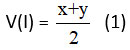
The closer x to y, the better V (I) approximates the corresponding real number.
Moore et al. introduced in 1995 5 the basic arithmetic operations on closed real intervals. In particular and according to the interests of the present article, if I1 = [x1, y1] and I2 = [x2, y2] are closed intervals, then their sum I1 + I2 is the closed interval

Also, if k is a positive number then the scalar product kI1 is the closed interval
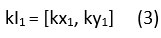
Remark: When the closed real intervals are used for handling approximate data, are also referred to as grey numbers (GNs). A GN [x, y], however, may also be connected with a winterization function f: [x, y] → [0, 1], such that, ∀ a ∈ [x, y], the closer f(a) to 1, the better a approximates the unknown number represented by [x, y] [8, Section 6.1].
Fuzzy Sets and Soft Sets
The existence of real-life uncertainty appears in several forms. Probability theory, which for many years was the unique tool for specialists for tackling problems related to uncertainty, was proved to be sufficient for handling only the types of uncertainty which is due to randomness. Zadeh, however, introduced in 1965 the concept of fuzzy set 10, which is suitable for tackling other forms of uncertainty too, like vagueness and imprecision. To treat in a better way the uncertainty, several generalizations of fuzzy sets and related to them theories introduced during the last 50-60 years, the combination of which provides an adequate framework for treating all the types of the existing in real life and science uncertainty.
A fuzzy set A in the set of the discourse U is defined in terms of its membership function m: U→ [0, 1]. The closer m(x) - called the membership degree of x in A - to 1, the better x satisfies the characteristic property of A.
An important disadvantage of the concept of fuzzy set, however, is that m(x) cannot be uniquely defined, its definition depends on the “signals” that each one receives from the real world, signals which are different from person to person.
Take, for example, the fuzzy set of “young men”. An observer aged 80 may consider as “young” a man aged 50, who at the same time could be considered as “old” by an observer aged 20! Thus, the only restriction in defining the membership function is to have a logical sense; otherwise, the corresponding fuzzy set does not represent reliably the corresponding real situation. This happens, for example, if a man aged 90 appears to have a membership degree ≥ 0.5 in the fuzzy set of “young men”.
The same difficulty holds for all generalizations of fuzzy sets involving membership functions, like Atanassov’s intuitionistic fuzzy set (membership and non-membership functions) 1, and Smarandache’s neutrosophic set (membership or truth, non-membership or falsity, and indeterminacy functions) 7, etc. Related to fuzzy sets theories have been also introduced, however, where definitions of membership functions are either not necessary (e.g. grey systems [2]), or are overpassed (e.g. rough sets [6], soft sets 4, etc.).
Molotov [4] introduced in 1999 the notion of a soft set as a tool for dealing with uncertainty with the help of a finite set E of parameters. Let f be a map from E into the power set P (U) of the universe U. Then the soft set (f, E) on U, is defined by

The name "soft" was given because the set (f, E) is a collection of subsets of the universe U depending on the set E of the parameters.
A FS on U with membership function y = m(x) is a soft set on U of the form (f, [0, 1]), where f(α)={x ? U:m(x) ≥ α}, for each α in [0, 1]. For more details on soft sets w,e refer to 3.
The Hybrid Assessment Method
Theoretical Design of the Method
Let U be a set of n objects, n≥2, under assessment ,and let E = {A, B, C, D, F} be the set of the linguistic grades (parameters) A=excellent, B=very good, C=good, D=mediocre, and F=not satisfactory. Define a map f: E → P(U) assigning to each linguistic grade of E the subset of U consisting of all its objects whose individual performance was assessed by this grade. Then a parametric assessment of the performance of the objects of U can be represented by the soft set

Let now nXbe the number of the objects of U whose performance was assessed by the grade X, X = A, B, C, D, F. Assign to each linguistic grade of E a closed real interval, denoted for simplicity by the same letter, as follows: A = [85, 100], B = [75, 84], C = [60, 74], D= [50, 59], F= [0, 49]. OThenthe mean performance of the objects of U can be approximated by the real interval

The interval M is determined with the help of equations (2) and (3) and the real value V (M), which gives a reliable numerical estimation of the mean performance of the objects of U, by equation (1).
Remark: The choice of the closed intervals A, B, C, D, F and corresponds to generally accepted standards for translating the corresponding qualitative grades in the numerical scale 0 -100. By no means, however, this choice could be considered as being unique, since it depends on the personal beliefs of each individual. For example, one could as well choose A = [80, 100], B = [70, 79], C = [60, 69], D= [50, 59], F= [0, 49], etc.
Example 1 (Chess players’ performance): Let U = {p1, p2,…, p19, p20} be the set of all the players of a chess club. Assume that the first 3 of them are to top-quality layers, the next 7 very good players, the following 5 good players, the next 3 mediocre players, and the last 2 novices with no satisfactory performance yet.
It is asked: 1) to make a parametric assessment of the club’s quality, and 2) to estimate the mean potential of the club.
Solution
1) Define a map f: E → P(U) by f(A) = {p1, p2, p3}, f(B) = {p4, p5, … ,p10}, f(C) = {p11, p12,… , p15}, f(D) = {p16, p17, p18}, and f(F) = {p19, p20}. Then the required parametric assessment of the club’s quality can be represented by the soft set (5).
2) Applying equation (6) one finds that the mean potential of the chess club is approximated by the real interval
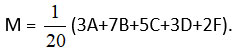
Applying equations (2) and (3) and making all the corresponding calculations one finally finds that

Thus, equation (1) gives that V(M) = 69.075, which shows that the mean potential of the club is good (C).
Example 2 (Machine performance): The production of a factory depends upon the function of its 12 intal machines. Assume that the first 7 of them work perfectly, the next 2 very satisfactorily, the function of the other 2 machines is good presenting some small technical problems only, and that the last machine needs repairing, ince its function is characterized by serious technical problems. It is asked: 1) to represent the general performance of the factory’s machines in a parametric manner, and 2) to estimate the level of the factory’s production under the currently existing conditions.
Solution: 1) Let U = {M1, M2, ...., M11, M12} be the set of the factory’s machines. Define a map f: E → P(U) by f(A) = {M1, M2,…., M7}, f(B) = {M8, M9}, f(C) = {M10, M11}, f(D) = ∅, and
f(F)={M12}. Then the required parametric assessment of the factory’s performance can be represented by the soft set (5).
2) Assign to each parameter of E the closed intervals A, B, C, D, F.and Obviously then the level of the factory’s production can be approximated by the closed real interval
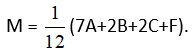
Applying equations (2) and (3) and making all the corresponding calculations one finds that
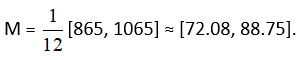
Thus, equation (1) gives that V(M) ≈ 80.415, which shows that the level of the factory’s production is very good (B).
Discussion and Conclusions
A hybrid method was developed in this paper for assessment with linguistic grades using soft sets and closed real intervals as tools. Soft sets enable a qualitative assessment in a parametric manner, whereas the real intervals enable one to quantify the qualitative assessment achieved with the help of soft sets. This is very useful when one must compare the performance of two or more groups of objects (humans or machines) during the same activity. Two examples were also presented involving chess players’ and machines’ performance illustrating our results.
It seems that hybrid methods, like the assessment method developed here, give in general good results and this is, therefore, a promising area for further research, not only for assessment, but for other processes as well, like decision making, tackling the existing in real world uncertainty, etc.
Acknowledgment
The author would like to thank, the School of Technological Applications Graduate Technological Educational Institute of Western Greece, Patras, Greece for their guidance and support in completing this article.
Conflict of Interest
The author declares no conflict of interest.
Funding Sources
The author received no financial support for the research, authorship, and publication of this article.
References
- Atanassov, K.T., Intuitionistic Fuzzy Sets, Fuzzy Sets and Systems, 20(1), 87-96, 1986.
CrossRef - Deng, J., Control Problems of Grey Systems, Systems and Control Letters, 288-294, 1982.
CrossRef - Maji, P.K., Biswas, R., & Ray, A.R., Soft Set Theory, Computers and Mathematics with Applications, 45, 555-562, 2003.
CrossRef - Molodtsov, D., Soft Set Theory-First Results, Computers and Mathematics with Applications, 37(4-5), 19-31, 1999.
CrossRef - Moore, R.A., Kearfort, R. B. & Clood, M.J., Introduction to Interval Analysis, 2nd Printing, SIAM, Philadelphia, 1995.
- Pawlak, Z., Rough Sets: Aspects of Reasoning about Data, Kluer Academic Publishers, Dordrecht, 1991.
CrossRef - Smarandache, F., Neutrosophy / Neutrosophic probability, set, and logic, Proquest, Michigan, USA, 1998.
- Voskoglou, M.Gr., Assessing Human-Machine Performance under Fuzzy Conditions, Mathematics, 7(3), article 230, 2019.
CrossRef - Voskoglou, M.Gr. & Broumi, S., A Hybrid Method for the Assessment of Analogical Reasoning Skills, Journal of Fuzzy Extension and Applications, 3(2), 152-157, 2022.
- Zadeh, L.A., Fuzzy Sets, Information and Control, 8, 338-353, 1965.
CrossRef - Zadeh, L.A., Outline of a new approach to the analysis of complex systems and decision processes, IEEE Transactions on Systems Man and Cybernetics, 3, 28-44, 1973.
CrossRef

This work is licensed under a Creative Commons Attribution 4.0 International License.