
The Application of Machine Learning Techniques for Forecasting Corrosion in Concrete Structures
Rajendran Dorothy1  , RM Joany2 , S Santhana Prabha3 , R Joseph Rathish3 , Susai Santhammal Rajendran4* , Abdulhameed Al-Hashem5 and A Krishnaveni6
1Department of ECE, Sri Danalakshmi Srinivasan University, Tiruchirappally, Tamil Nadu India .
2Department of ECE, Sathyabama Institute of Science and Technology, eemed to be University, Jeppiar Nagar, Chennai, Tamil Nadu India .
3Department of Computer Science, PSNA College of Engineering and Technology, Dindigul, Tamil Nadu India .
4Corrosion Research Centre, St Antony’s College of Arts and Sciences for women, Dindigul, Affiliated to Mother Teresa Women’s University, Kadaikanal, Tamil Nadu India .
5Petroleum Research Centre, Kuwait Institute for Scientific Research, Kuwait .
6Department of Chemistry, Yadava College, Madurai, Tamil Nadu India .
http://dx.doi.org/10.13005/OJPS09.02.04
Machine learning is a distinct field within artificial intelligence (AI) that utilizes algorithms trained on data sets to create models capable of self-learning. These models can independently predict results and categorize information without requiring human intervention. At present, machine learning is employed in numerous commercial industries, including recommending products to customers based on their past purchases, predicting fluctuations in the stock market, and aiding in the translation of text across various languages. It stands as the most prevalent form of artificial intelligence technology in use worldwide. You may have observed various common applications of machine learning in your daily life, such as: Recommendation systems that suggest products, music, or television shows, as utilized by platforms like Amazon, Spotify, or Netflix. Voice recognition technologies that facilitate the conversion of voice notes into written text. Fraud detection systems used by financial institutions that automatically recognize and alert on potentially fraudulent transactions. Autonomous vehicles and driver assistance systems, including features like blind-spot detection and automatic braking, significantly improve road safety. This article examines the use of machine learning techniques to forecast the corrosion patterns of steel reinforcement bars that are embedded within concrete structures.
Copy the following to cite this article:
Dorothy R, Joany R. M, Prabha S. S, Rathish R. J, Rajendran S. S, Al-Hashem A, Krishnaveni A. The Application of Machine Learning Techniques for Forecasting Corrosion in Concrete Structures. Oriental Jornal of Physical Sciences 2024; 9(2).
DOI:http://dx.doi.org/10.13005/OJPS09.02.04Copy the following to cite this URL:
Dorothy R, Joany R. M, Prabha S. S, Rathish R. J, Rajendran S. S, Al-Hashem A, Krishnaveni A. The Application of Machine Learning Techniques for Forecasting Corrosion in Concrete Structures. Oriental Jornal of Physical Sciences 2024; 9(2).Avialable here: https://bit.ly/49yZhhE
Download article (pdf) Citation Manager Publish History



Introduction
Corrosion
Corrosion is a natural phenomenon that transforms pure metals into undesirable compounds through their interaction with elements like water or air. This chemical reaction triggers the degradation and disintegration of the metal, starting from the regions exposed to environmental influences and eventually impacting the entire volume of the metal. Generally, corrosion is viewed as an undesirable event, as it negatively affects the advantageous properties of the metal.
Corrosion of reinforcing steel
The deterioration of concrete structures globally is increasingly attributed to the corrosion of reinforcing steel. However, funding for infrastructure projects is being unfairly curtailed as a result of sequestration and a shrinking discretionary budget.
The entirety of our infrastructure, encompassing highways, airports, water supply systems, waste treatment facilities, energy supply, and power generation, requires considerable investment and is susceptible to degradation caused by corrosion. This deterioration has a profound effect on the service life, reliability, and functionality of structures and equipment, in addition to overall safety.
Corrosion of steel embedded in concrete structures - An electrochemical process.
The deterioration of steel embedded in concrete structures is an electrochemical process that requires the presence of oxygen, moisture, and specific catalysts to commence. This phenomenon results in the formation of rust, which can increase in volume by two to four times that of the original steel, while simultaneously lacking the advantageous mechanical properties of the steel itself.
Corrosion also leads to the formation of pits or voids on the surface of reinforcing steel, which reduces its strength capacity as a result of the decrease in cross-sectional area. Concrete corrosion refers to the deterioration of metal resulting from chemical, electrochemical, and electrolytic reactions that take place in its surrounding environment.
Corrosion resulting from carbonation and the presence of chlorides
The corrosion of steel that is embedded within concrete is mainly attributed to carbonation or the presence of chlorides. Carbonation takes place when carbon dioxide from the air interacts with calcium compounds found in the concrete, resulting in a decrease in the pH level of the concrete and subsequently triggering the corrosion of the steel.
Chloride-induced corrosion, on the other hand, entails the movement of chlorides through the concrete to the steel, which can greatly expedite the corrosion process. Research indicates that there is a particular chloride threshold level at which a notable rise in the corrosion rate occurs.
Researchers have been attempting to determine the chloride threshold for many years; however, the results have shown significant variability. This inconsistency is likely attributed to the range of experimental conditions and the varying properties of the steel and concrete utilized. A crucial aspect to consider is the moisture content within the concrete.
It is widely recognized that in dry concrete, the corrosion rate of steel is significantly low due to its high resistivity. Conversely, in concrete that is highly saturated, the corrosion rate also remains low, attributed to the slow diffusion of oxygen to the steel surface. However, under conditions of moderate moisture, the corrosion rate is expected to rise due to decreased resistivity and an increased rate of oxygen transport.
Materials and Methods
Machine learning (ML)
Machine learning is a subset of artificial intelligence dedicated to the development and analysis of statistical algorithms that can learn from data and make predictions about new, previously unencountered data. This ability enables the execution of tasks without the need for explicit programming directives.
Recent developments in deep learning have allowed neural networks to surpass numerous conventional methods in terms of efficiency.
Machine learning finds application across a wide array of domains, such as natural language processing, speech recognition, computer vision, agriculture, email filtering, and healthcare. The implementation of machine learning to tackle business-related issues is known as predictive analytics.
The principles of machine learning are grounded in statistical methodologies and mathematical optimization techniques. A closely associated discipline, data mining, emphasizes exploratory data analysis (EDA) through the application of unsupervised learning methods.
Theoretically, the notion of probably approximately correct (PAC) learning provides a framework for understanding machine learning in a more nuanced manner.
Machine learning (ML) became recognized as a separate field in the 1990s, signifying a notable shift in its emphasis. The main goal evolved from seeking artificial intelligence to tackling practical and solvable challenges. This transition entailed departing from the symbolic methodologies inherited from artificial intelligence and adopting approaches and models based on probability theory, fuzzy logic, and statistics.
Machine learning constitutes a subset of artificial intelligence
Machine learning is a subset of artificial intelligence (AI) that utilizes models created from algorithms trained on data sets to perform tasks that are comparatively intricate and were historically performed by humans, such as making predictions and classifying data.
Machine learning has become one of the most widespread types of artificial intelligence in modern society, playing a crucial role in many recent developments in the products and services that individuals engage with in their daily lives.
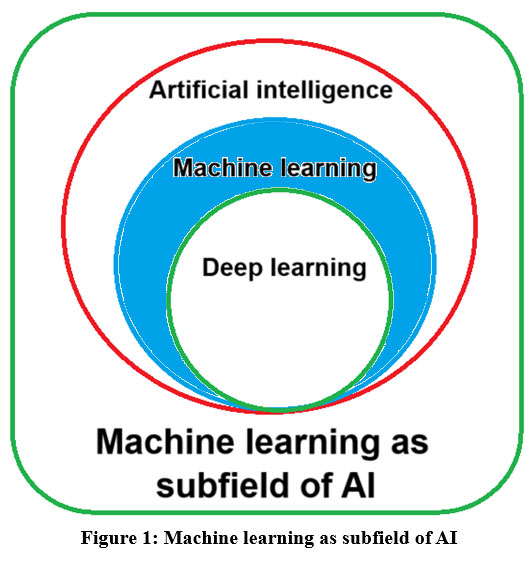 | Figure 1: Machine learning as subfield of AI |
Here are ten practical implementations of machine learning across different sectors. (Figure2 ).
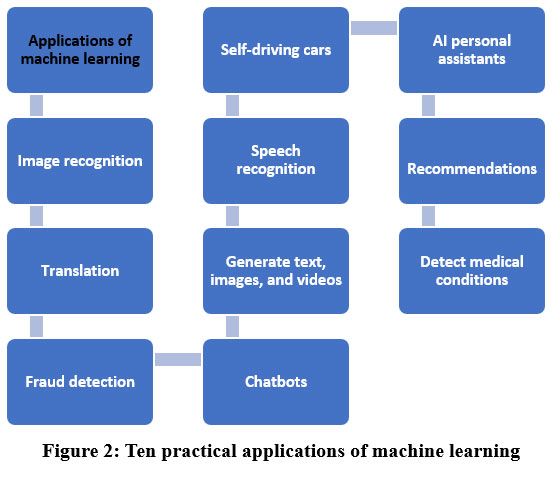 | Figure 2: Ten practical applications of machine learning |
Image Recognition
Machine learning is often utilized for tasks related to image recognition. In this context, data specialists train machine learning algorithms with diverse data sets to create models capable of identifying and categorizing particular images.
These models are widely utilized in various applications, including the recognition of unique landmarks, plant species, and even individual persons in images. Prominent platforms that leverage machine learning for image recognition include Facebook, TikTok, and Instagram.
Translation
Machine learning is particularly well-suited for translation tasks. The vast array of written material accessible in digital formats provides a significant dataset that can be leveraged to create machine learning models for translating texts across different languages.
This approach, known as machine translation, includes a range of techniques that specialists in artificial intelligence can utilize to develop translation models. Different approaches include rule-based, statistical, and syntax-based models, as well as neural networks and hybrid methods. Notable instances of machine translation services are Google Translate, Amazon Translate, and Microsoft Translator.
Fraud Detection
Financial institutions process millions of transactions each day. Consequently, it is clear that distinguishing between authentic and fraudulent transactions poses a considerable challenge for these organizations. As online banking services and cashless payment methods become increasingly prevalent, there has been a notable rise in fraudulent activities. A report from TransUnion in 2023 revealed that digital fraud attempts in the United States increased dramatically by 122 percent from 2019 to 2022.
Artificial intelligence is essential for financial institutions in detecting potentially fraudulent transactions, thus protecting consumers from incorrect charges by emphasizing those that seem suspicious or unusual.
Mastercard utilizes artificial intelligence technology to identify potential scams in real time and to predict specific fraudulent activities prior to their occurrence, thereby enhancing consumer protection against theft in particular situations.
Chatbots
Effective communication is an essential component for nearly all businesses operating in today's environment. Organizations depend on customer support to assist clients in resolving their issues or to recommend the most suitable products that align with their specific requirements, thereby ensuring that customers receive the necessary support.
The financial strain associated with maintaining a skilled team of customer support professionals can pose challenges for many organizations in delivering the necessary resources to their clients. As a result, many customer support specialists may find themselves overwhelmed with a diverse array of client needs, ranging from issues that can be quickly addressed to those that require more in-depth assistance.
AI-powered chatbots provide organizations with crucial assistance by meeting the basic needs of customers. Utilizing natural language processing, these chatbots can efficiently address specific questions and direct users to appropriate resources, allowing customer support representatives to concentrate on more intricate problems.
Generate text, images, and videos
Generative AI possesses the ability to swiftly create original content, including text, images, and videos, based on straightforward prompts.
Consequently, numerous organizations and individuals are utilizing generative AI tools such as DALL-E and ChatGPT for various purposes, including the enhancement of website content, the creation of visual assets, and the production of marketing videos.
While generative AI has the potential to produce a variety of impressive results, it also poses the risk of creating content that could be inaccurate or misleading. Consequently, if you are employing generative AI in your professional activities, it is advisable to apply a careful level of scrutiny before sharing the material with a wider audience.
Speech Recognition
In numerous scenarios, including operating a vehicle, mixing ingredients for dough, or participating in an extended run, employing voice commands to control a smart device frequently proves to be more practical than stopping to use one's hands for input. Progress in machine learning has equipped many smart devices with the capability to comprehend spoken language when users issue commands, facilitating task execution without necessitating direct engagement.
This feature proves to be especially beneficial for tasks including placing phone calls, establishing reminders, or finding a particular program on a streaming service. Currently, speech recognition has become a prevalent feature in many easily accessible smart devices, including Google's Nest speakers and Amazon's Blink home security system.
Self-driving cars
One of the most notable technological developments in recent years is the advent of autonomous vehicles. Once confined to the domain of science fiction, this idea has now become a reality, with various commercially available models showcasing semi-autonomous features, such as the BMW X5 and Tesla Model S. Automotive manufacturers are actively working towards the creation of fully autonomous vehicles, aiming to make them a viable option for commuters in the coming decade.
The development of an autonomous vehicle is a complex and ongoing process; however, it fundamentally relies on advancements in machine learning and computer vision technologies.
The vehicle, as it transitions from one location to another, employs computer vision to evaluate its environment and applies machine learning algorithms to facilitate real-time decision-making.
AI Personal Assistants
Numerous individuals may find it advantageous to receive extra assistance in their everyday tasks. Consequently, a variety of smart devices are equipped with AI personal assistants, which are specifically designed to help users with routine activities such as scheduling appointments, placing phone calls, or taking notes. Many individuals are unaware that every time they engage Siri, Alexa, or Google Assistant for various tasks, they are utilizing software that operates on machine learning technology.
Recommendations
Organizations and marketers invest significant resources to create a link between consumers and appropriate products at the most advantageous times. Ultimately, when they can deliver content or products that meet customers' needs precisely when required, the probability of a purchase rises, or at the very least, customers are more likely to stay engaged with their platform. Sales representatives in brick-and-mortar retail settings have historically excelled at matching consumers with products that align with their preferences.
With the increasing prevalence of online and digital shopping, it is crucial for organizations to provide a similar level of support to customers engaging in online purchases.
Contemporary e-commerce platforms and streaming services employ recommendation engines to deliver tailored suggestions to consumers, utilizing data such as geographic location and previous purchases. Notable platforms that integrate machine learning-driven recommendation systems include Instagram, Amazon, and Netflix.
Detect medical conditions
The healthcare sector is inundated with extensive volumes of data. Medical facilities serve as essential repositories of important health information, which includes a wide range of materials from electronic health records to diagnostic imaging. This information can be utilized to train machine learning algorithms aimed at recognizing medical conditions.
Some researchers are actively employing machine learning techniques to categorize cancerous lesions in medical imaging, whereas others are developing software intended to assist healthcare professionals in achieving more precise diagnoses.
Results and discussion
This research examines the application of machine learning techniques to forecast corrosion problems in concrete structures.
Evaluation of the likelihood of steel corrosion in mortars through the application of machine learning techniques1
Corrosion assessment enables engineers to effectively evaluate the corrosion condition of steel within concrete structures. However, current assessment methods predominantly utilize a single-factor approach, limiting their adaptability to different corrosion situations. Furthermore, many of these techniques employ a conservative deterministic framework that fails to consider the uncertainties inherent in corrosion evaluations. This study leverages machine learning (ML) to develop a multifactor classification model aimed at assessing corrosion status at various levels, along with the generation of relevant corrosion probability maps.
Initially, a comprehensive dataset on corrosion was compiled, which included variables such as relative humidity (RH), electrical resistivity (ER), corrosion potential (CP), and corrosion rate (CR). The corrosion rate was utilized to categorize various degrees of corrosion, and machine learning classification models were developed for both three-factor and two-factor configurations.
The most systematically structured model was subsequently utilized to develop corrosion probability maps that correspond to different degrees of corrosion. The results indicated that the restricted reliability and accuracy of current corrosion evaluation methods stem from the variable corrosion behaviors affected by carbonation and the presence of chlorides in concrete.
Additionally, when employing corrosion likelihood maps to evaluate the corrosion status of steel embedded in mortars, it is essential to first assess the active condition of the steel using CP and ER measurements. This should be complemented by an evaluation of RH and CP to ascertain whether the steel is experiencing a state of simple corrosion.
A predictive method utilizing machine learning to assess the interface bond strength between fiber-reinforced polymer bars and concrete, grounded in a multi-feature analytical approach2
In challenging service environments, the degradation of reinforcement presents a considerable obstacle for concrete structures. Fiber reinforced polymer (FRP) materials, known for their lightweight properties, high cost, and exceptional resistance to corrosion, play a vital role in enhancing the durability of these structures. The effectiveness of the bond between FRP bars and concrete is crucial for their combined performance and is essential for the design and safety evaluation of FRP-reinforced concrete structures. This study provides a thorough examination of various factors, including the material and mechanical properties of FRP bars, the mechanical characteristics of concrete, and the bond length.
A meticulous search methodology is employed to establish the optimal parameters necessary for assessing the bond strength between FRP bars and concrete. These parameters are subsequently integrated with four machine learning (ML) algorithms—Support Vector Machines (SVM), Decision Trees (DT), Random Forest (RF), and Extreme Gradient Boosting (XGB)—to model the nonlinear relationship between the influencing factors and bond strength. This approach yields a comprehensive and interpretable prediction framework for bond strength at the interface of FRP bars and concrete. The accuracy of the model's predictions is subsequently validated using a test dataset, and a comparative analysis is conducted among the predictive models generated by the four ML algorithms, as well as against traditional empirical design formulas.
The results indicate that machine learning models outperform empirical formulas in terms of predictive performance and accuracy, with the XGB algorithm achieving the highest levels in both categories. Additionally, to tackle the inherent lack of transparency in machine learning algorithms, the SHAP technique is utilized to enhance the interpretability of the bond strength prediction process. The newly developed hybrid machine learning model offers an effective approach for the comprehensive assessment of bond strength at the interface between FRP bars and concrete.
The deterioration of bond strength in reinforced concrete due to corrosion-induced cracking and the predictive model utilizing machine learning3
Reinforced concrete (RC) structures, during prolonged periods of service, are subjected to corrosive agents like chloride salts, which adversely affect the integrity of the interface bond. This deterioration ultimately reduces both the structural load-bearing capacity and overall durability. To comprehensively assess the durability of RC structures in environments such as oceans and salt lakes, this study combines experimental techniques with machine learning (ML) approaches to analyze degradation patterns and develop predictive models for bond performance in the context of chloride salt corrosion.
A series of central pull-out tests were conducted following an electrochemical enhanced dry-wet cycle corrosion protocol to examine the deterioration patterns of bond performance between corroded steel bars and concrete. This analysis considered varying levels of corrosion and the widths of cracks resulting from corrosion. Through a proportional analysis of crack progression, the morphology of the steel bars embedded in the reinforced concrete samples, and their associated failure modes, this study offers an in-depth investigation into the degradation patterns induced by corrosion at the bond interface.
The relationships between the extent of corrosion, the width of cracks, and bond strength were examined, along with the variations in bond strength concerning both crack width and the level of corrosion. Additionally, the bond strength parameters were evaluated from an energy perspective. The findings indicate that both bond strength and bond energy diminish as the width of cracks caused by corrosion in the concrete increases. Moreover, utilizing the experimental data from this research, machine learning predictive models for bond strength were developed, with the width of corrosion-induced cracks serving as the controlling variable.
The results indicate that the machine learning-based predictive models for bond strength align closely with the experimental data, demonstrating improved accuracy and reliability compared to conventional bond strength models. These research outcomes provide a substantial theoretical foundation and practical guidance for the safety evaluation, maintenance, strengthening, and comprehensive design of corroded reinforced concrete structures.
An evaluation of chloride ion permeation in concrete under multifactorial conditions through predictive and experimental methods utilizing the XGBoost algorithm4
Chloride ions penetrate concrete structures, causing deterioration of the steel reinforcement. This degradation leads to concrete spalling and reduces the load-bearing capacity, ultimately culminating in structural failure. Therefore, it is essential to understand the diffusion process of chloride ions within concrete.
Recent models designed to predict chloride ion diffusion in concrete demonstrate a lack of accuracy, primarily due to their overly simplistic treatment of variables and the intricate interactions among environmental and material factors that influence critical parameters such as the chloride diffusion coefficient (D) and surface chloride concentration (Cs). Accurately representing these influences through straightforward linear or non-linear relationships poses a challenge, and traditional machine learning models often suffer from overfitting the training data, resulting in inadequate performance on new datasets.
This research conducts physical model experiments to investigate the diffusion process of chloride ions under conditions of multi-field coupling. It examines chloride ion concentrations across various concrete layers while systematically varying environmental factors such as temperature (T), erosion duration (t), humidity (h), water-cement ratios (W/C), and coarse aggregate volumes (v). The findings of this study elucidate the distribution patterns of chloride ions within the concrete layers.
An XGBoost machine learning prognostic model was created utilizing environmental temperature, water-cement ratio, humidity, erosion time, and coarse aggregate volume as input variables, while Cs and D served as output variables. The results indicate that when the water-cement ratio attains a value of 0.5 under conditions of high humidity, the SHAP value increases to 0.015, thereby facilitating chloride diffusion.
In addition, when the duration of erosion surpasses 200 days and the temperature exceeds 38 °C, the SHAP value reaches its maximum at 0.02. Moreover, within the coarse aggregate volume range of 0.45 to 0.60, fluctuations in temperature have minimal effect on Cs. A graphical user interface was also developed for modeling D and Cs to enhance practical usability.
The combination of machine learning techniques and Monte Carlo Simulation for the probabilistic evaluation of durability in reinforced concrete structures impacted by corrosion due to carbonation5
This study introduces an innovative approach that combines a machine-learning algorithm with a Monte Carlo simulation technique to evaluate the durability of reinforced concrete (RC) structures subjected to carbonation-induced corrosion. The investigation initiates by predicting the carbonation depth of concrete specimens under natural conditions, utilizing Artificial Neural Networks (ANNs) alongside a backpropagation algorithm.
A comprehensive database was established by aggregating information from 870 literature sources, facilitating the creation of 100 artificial neural network (ANN) models with various topologies. A thorough evaluation was conducted to identify the most relevant ANN architecture. Following this, the methodology was applied in a case study to evaluate the project lifespan of structures in a real-world context, thereby demonstrating its practical application.
A parametric study was conducted to analyze the effects of the material's compressive strength and the thickness of the concrete cover on durability. The design life was evaluated using the Monte Carlo Simulation method in conjunction with the ANN model, which determined the likelihood of depassivation resulting from carbonation.
The findings indicate that a 25% decrease in concrete cover would result in a 48% reduction in the design lifespan of the structure, underscoring the critical importance of accurately determining and applying the appropriate thickness of concrete cover in reinforced concrete constructions.
Analysis of dual time-dependent chloride diffusion in concrete utilizing physical information neural networks6
Chloride-induced corrosion is often referred to as the "cancer" of concrete structures. To ensure the durability of concrete subjected to chloride environments, it is essential to accurately assess the concentration of chloride ions within the concrete over various service periods.
Fick's diffusion equation plays a crucial role in addressing this matter. However, traditional analytical techniques for solving diffusion differential equations are inadequate when applied to the Fick diffusion equation, primarily because of the complex interplay between dual surface chloride concentrations (Cs) and the time-dependent nature of chloride diffusion coefficients (D) in concrete. Additionally, the finite element method often proves to be inefficient, and there are significant concerns regarding the reliability of standard machine learning approaches.
In this research, a feedforward neural network is developed as an experimental function and integrated into the Fick diffusion equation. This approach considers the dual time-dependent characteristics, along with the associated initial and boundary conditions, to produce residuals. Subsequently, a loss function is established based on these residuals, facilitating the creation of the Physical Information Neural Network (PINN). This network aims to obtain numerical solutions for the Fick equation while incorporating the dual time-dependent effects of Cs and D.
The efficacy of the algorithm is validated through a comparative analysis of the predictions generated by the PINN model in relation to results obtained from finite element numerical simulations and field exposure studies across numerous case studies. The findings indicate that the PINN algorithm, following the establishment of boundary conditions, demonstrates a high level of predictive accuracy for chloride diffusion in concrete, even when considering the simultaneous time-dependent influences of Cs and D.
Identification of bridge damage states independent of cause through the application of machine learning techniques7
The prevailing inventory of bridges, both in the European Union and worldwide, encompasses many structures that are approaching the end of their designed lifetime, with numerous showing signs of worsening. Amongst the numerous factors contributing to this failure, tendon corrosion is documented as the predominant reason. The unreachability of tendons obscures their condition valuation, demanding invasive examination practices, which makes appraising the structural truthfulness of bridges with corroded tendons predominantly challenging.
Worsening in bridges frequently presents as noticeable perpetual deflections; nevertheless, these refractions are problematic to link to exact injury in a old engineering context due to their unclear nature. To attack this matter, a pioneering data-driven process is predictable for the preliminary estimate of bridge damage states.
This schedule enables an investigation of the paraphernalia of the worsening process, with a exact emphasis on vertical deck drifts, and creates a association amid these drifts and defined harm levels, which are indispensable for reintegration enterprises. The procedure is demonstrated through a balanced cantilever bridge positioned in northwestern Greece, which is presently facing distinguished deflections in its cantilever section.
The approach exploits a limited element model of the bridge to evaluate the implications of tendon loss on its structural integrity, considering individual values of concrete Young's modulus and potential impairment patterns in the prestressing tendons to address issues related to tendon loss and creep effects.
A arithmetical dataset reflecting structural responses has been created, enabling the development of drift-based brittleness functions. This dataset permits the application of the k-Nearest Neighbours (k-NN) machine learning algorithm to rapidly evaluate the damage state of bridges, a process that would normally require widespread examinations and testing.
The only inputs needed for evaluating the bridge's damage state are the observed deflected shape and the measured Young's modulus of the concrete. Accordingly, the proposed tactic is remarkable for its capability to convert vertical deck deflections, which designate tendon loss, into a quantifiable level of bridge damage. This capability is indispensable for making informed conclusions regarding the retrofitting and adaptation of bridges.
Predicting bond strength in corroded BFRP concrete structures through data-driven methods8
The mechanical data-driven predictions regarding bond strength in corroded basalt fiber-reinforced polymer (BFRP) concrete structures are significantly overstated due to the bonding characteristics between the BFRP reinforcement and the concrete matrix in corrosive environments. An accurate and reliable method for evaluating bonding strength is essential for effective engineering practices. However, current experimental techniques and empirical models fail to adequately capture the complex interactions among the various bonding factors.
This research presents a methodology based on machine learning (ML) for predicting bonding strength, utilizing random forests (RF) and adaptive boosting (AdaBoost) algorithms to assess the interfacial bond strength of BFRP reinforcement in corroded concrete. The model was developed using a dataset comprising 355 samples, successfully uncovering the correlations among BFRP reinforcement characteristics, concrete properties, corrosion impacts, and bonding strength. The performance of both algorithms was assessed using R², RMSE, and MAE metrics, with the predictive outcomes further elucidated through the SHAP method.
The results indicate a significant correlation between the predictions generated by the machine learning model and the experimental data, with the AdaBoost model achieving an R2 value of 0.925 on the test dataset, showcasing exceptional predictive accuracy. Among the various factors analyzed, corrosion emerged as the most critical factor influencing bonding strength, followed by concrete compressive strength and the yield strength of BFRP bars.
The model was assessed based on established empirical formulas, confirming its efficacy and reliability. This study provides a novel method for forecasting bond strength in corroded BFRP bar-concrete systems.
Estimation of the axial load-bearing capacity of reinforced concrete columns affected by corrosion and enhanced with integrated fiber-reinforced polymer9
The primary factor contributing to the deterioration of reinforced concrete (RC) structures is the onset of corrosion within the steel framework of the RC. In modern construction practices, numerous retrofitting techniques are accessible. Notably, fiber-reinforced polymer (FRP) has been recognized as a highly effective rehabilitation approach for corroded structures, aimed at improving their structural performance.
Accurately assessing the axial strength of columns reinforced with fiber-reinforced polymer (FRP) that have been compromised by corrosion presents significant challenges, both in controlled laboratory settings and in real-world applications. To address these challenges, predictions of axial capacity can be derived through various analytical techniques and artificial intelligence (AI) methodologies. This study details the compilation of a comprehensive dataset of circular columns sourced from existing literature to estimate the axial strength of both FRP-wrapped and unreinforced reinforced concrete (RC) columns affected by corrosion.
The laboratory results derived from this dataset were correlated with the corresponding values predicted by applicable design codes, including those established by the American Concrete Institute (ACI 440.2R-17 and ACI 318-19) as well as the Bureau of Indian Standards (IS 456:2000).
Five machine learning models were utilized to assess the axial load-bearing capacity of both FRP-strengthened and unstrengthened corroded reinforced concrete columns. The results indicated that the extreme gradient boosting (XGBoost) model exhibited the highest accuracy with the lowest error rate, thereby positioning it as a valuable tool for the scientific community and FRP specialists in predicting the axial performance of corroded columns, irrespective of their FRP strengthening condition.
The results derived from the established design codes indicated the presence of significant forecasting inaccuracies. Additionally, an analysis of feature importance was performed utilizing the Shapley Additive Explanations algorithm to evaluate the impact and contribution of each input parameter on axial capacity.
This research highlighted the significant influence of the released compressive strength of concrete on the axial capacity of columns. Furthermore, to enhance the accuracy of axial capacity assessments and improve overall effectiveness in engineering practices, a user-friendly web-based platform was developed for FRP applicators and engineers to facilitate this process.
Investigating the application of machine learning to analyze and forecast the chloride threshold level for carbon steel reinforcement10
Chloride-induced corrosion of steel reinforcing bars (rebar) is a well-recognized factor that exacerbates the deterioration of reinforced concrete structures, presenting a significant challenge to the integrity of infrastructure. The chloride threshold level (CTL) for rebar, which indicates the minimum concentration of chloride required to trigger active corrosion, is essential for models that predict corrosion rates and the service life of these structures.
Significant uncertainties and inconsistencies in the influencing factors, coupled with the lack of a standardized testing methodology, impede the determination of a reliable CTL range for service life models and complicate the evaluation of current datasets. This research tackles these challenges by creating various machine learning models to predict CTL, utilizing 21 meticulously selected features.
A comprehensive database comprising 423 data points was compiled through an extensive review of the literature. Seven machine learning models—linear regression, random forest, decision tree, K-nearest neighbors, artificial neural network, support vector machine, and an ensemble model—were developed and refined.
The ensemble model demonstrated superior predictive performance, achieving a mean absolute error of 0.218% related to the binder's weight, a root mean square error of 0.321%, and a coefficient of determination of 0.751 when assessed using previously untested CTL data. Additionally, partial dependence plots generated from the support vector machine model illustrated the influence of each feature on CTL.
The random forest model identified the SiO? binder content and the extent of exposed rebar to chlorides as the most significant factors. Furthermore, the study revealed the impact of supplementary cementitious materials (SCMs), indicating that only blast furnace slag had a beneficial effect on CTL.
Conclusion
Machine learning is a subdivision of computer science and a specific facet of data science that emphasizes the development and application of algorithms, allowing a computer, software application, or process to learn independently, without requiring direct programming instructions.
Machine learning is fundamentally based on algorithms that examine input data to produce predictions and facilitate decision-making using statistical techniques.
As a result, instead of relying on manual data analysis to develop the computational models essential for the operation of automated systems, software applications, or processes, machine learning systems are capable of completely automating this task by drawing insights from previous experiences.
The benefits of utilizing machine learning go beyond the simple analysis of Big Data for the purpose of automatic information extraction.
Organizations mainly employ machine learning systems to automate the operations of computer or software applications, thus enhancing the efficiency of particular processes or tasks.
Furthermore, these systems contribute to the improvement of various methodologies utilized in data analysis.
This article explores the utilization of machine learning methods to predict corrosion issues in concrete structures.
Acknowledgement
The authors are thankful to their respective managements for their help and support.
Funding Sources
This paper is not funded by any agency.
Conflict of Interest
The authors do not have any conflict of interest.
Data Availability Statement
This statement does not apply to this article.
Ethics Statement
“This research did not involve human participants, animal subjects, or any material that requires ethical approval.”
Informed Consent Statement
This study did not involve human participants, and therefore, informed consent was not required.
Author Contributions
SSR (Susai Santhammal Rajendran), RD (Rajendran Dorothy): Conceptualization, Methodology, Writing – Original Draft.
Rajendran Maria Joany, Sivakumar Santhana Prabha and Rajendran Joseph Rathish : Data Collection, Analysis, Writing – Review & Editing.
Abdulhameed Al-Hashem and Arjunan Krishnaveni : Visualization, Supervision, Project Administration.
References
- Ji, H., Lyu, Y., Tian, Z., Ye, H., Assessment of corrosion probability of steel in mortars using machine learning, Reliability Engineering and System Safety, 2025; 253: 110535 .
CrossRef - Huang, T., Wan, C., Liu, T., Hao, D., Miao, C., Machine learning prediction method for the interface bond strength between fiber reinforced polymer bars and concrete based on multi-feature driven analysis, Materials Today Communications,2024; 41:110706.
- Huang, T., Wan, C., Liu, T., Miao, C., Degradation law of bond strength of reinforced concrete with corrosion-induced cracks and machine learning prediction model, Journal of Building Engineering, 2024;98: 111022.
CrossRef - Yu, X., Hu, T., Khodadadi, N., Liu, J., Nanni, A. , Predictive and experimental assessment of chloride ion permeation in concrete subjected to multi-factorial conditions using the XGBoost algorithm Journal of Building Engineering, 2024;98:111041.
CrossRef - Felix, E.F., Lavinicki, B.M., Bueno, T.L.G.T., de Castro, T.C.C., Cândido, R.A., Integrating machine learning and Monte Carlo Simulation for probabilistic assessment of durability in RC structures affected by carbonation-induced corrosion, Journal of Building Pathology and Rehabilitation, 2024;9:(2), 143.
- Guo, R., Wang, J., Yuan, Y., Dengguo L., Jin, Y., Shan, H., Interpretation of dual time-dependent chloride diffusion in concrete based on physical information neural networks, Case Studies in Construction Materials, 2024;21: e03769.
CrossRef - Kazantzi, A.K., Moutsianos, S., Bakalis, K., Mitoulis, S.-A., Cause-agnostic bridge damage state identification utilising machine learning, Engineering Structures, 2024; 320:118887.
CrossRef - Li, B., Zhang, J., Qu, Y., Chen, D., Chen, F., Data-driven predicting of bond strength in corroded BFRP concrete structures, Case Studies in Construction Materials, 2024;21: e03638.
- Kumar, P., Arora, H.C., Kumar, A., Radu, D., Prediction of axial capacity of corrosion- affected RC columns strengthened with inclusive FRP, Scientific Reports,2024; 14:(1), 14011.
- Maamary, N., Ogunsanya, I.G., Exploring machine learning to study and predict the chloride threshold level for carbon steel reinforcement, Cement and Concrete Composites, 2024;154: 105796.

This work is licensed under a Creative Commons Attribution 4.0 International License.